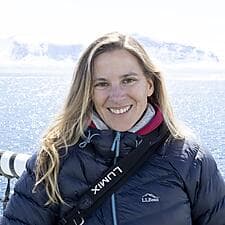
Marine Scientist
Cassandra Brooks
Cassandra Brooks is an Associate Professor in Environmental Studies at the University of Colorado Boulder and a Faculty Fellow in the Institute of Arctic and Alpine Research. Cassandra has a fierce passion for Antarctica, with the last 20 years of her career focused on protecting the region.
Cassandra completed a PhD at Stanford University, studying international ocean policy, with a focus on marine protection in the Antarctic. In her previous graduate work at Moss Landing Marine Labs, she studied Antarctic toothfish in the Ross Sea, a population that supports the most remote fishery on Earth. She was also a core member of The Last Ocean, a grand-scale media project focused on the Ross Sea. Her efforts helped drive the adoption of the world’s largest marine protected area in the Ross Sea, Antarctica – one of the healthiest and most productive marine ecosystems left on Earth. For this work, she was awarded a Switzer Fellowship in Environmental Leadership (2015), the Ronne Award for Antarctic Research or Exploration through the Society of Woman Geographers (2022), and ‘The Explorers Club 50’ honor (2022). For her interdisciplinary engaged scholarship, she was recognized with the Early Career Award from the Association for Environmental Studies and Sciences (2021). At the University of Colorado Boulder, she has also received the Excellence in Service & Leadership Award (2023) and Graduate School Outstanding Faculty Mentor Award (2023).
As an engaged scholar, Cassandra works across academic, public, and policy spheres. She has published around 100 academic articles in academic journals, including Science and Nature. Furthermore, Cassandra is trained as a Science Communicator through the University of California Santa Cruz and has published more than 175 popular articles and multimedia stories about marine science and the environment, including in The Seattle Times, Science, and National Geographic. Cassandra also currently participates in meetings of the Antarctic Treaty and the Commission for the Conservation of Antarctic Marine Living Resources as a representative of the Scientific Committee on Antarctic Research, bringing forward science to inform policy. She leads a diverse interdisciplinary research group and is committed to empowering the next generations of environmental leaders through teaching and mentoring.
Her work in the Ross Sea continues, both in studying the ecosystem and in continuing to support its protection. Cassandra currently leads the Ross Sea Marine Protected Area Research Coordination Network, an international community focused on research and monitoring in the Ross Sea and ensuring its legacy of protection.
Language spoken: English
Photo credit: John Weller
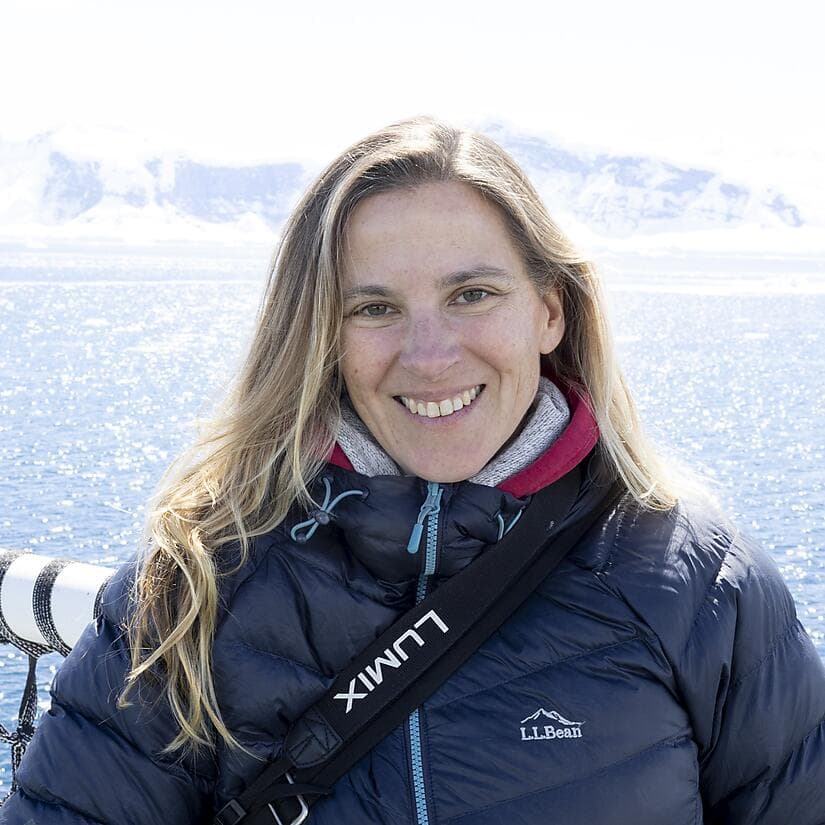
An Bord mit Cassandra Brooks
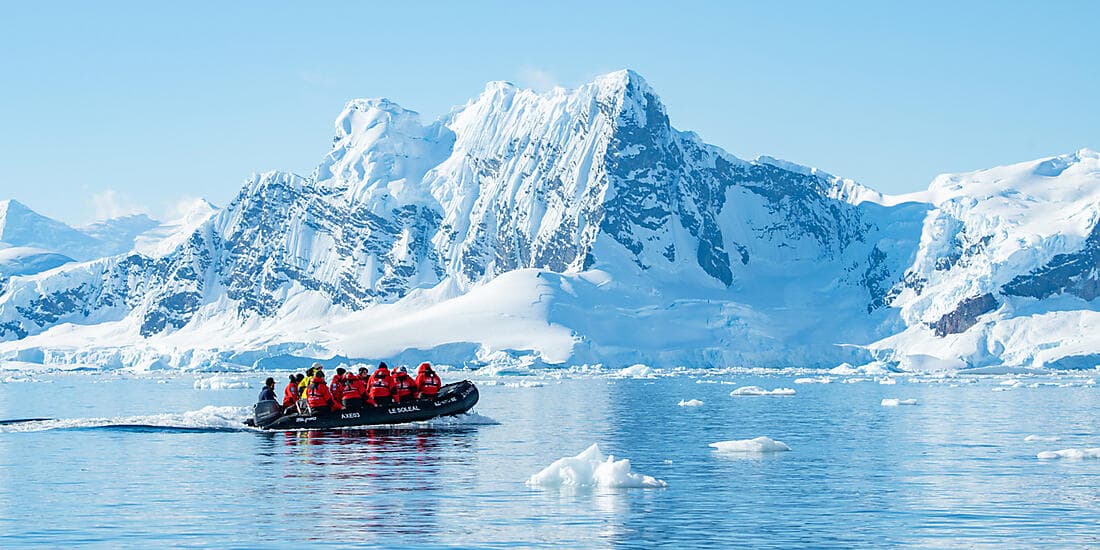
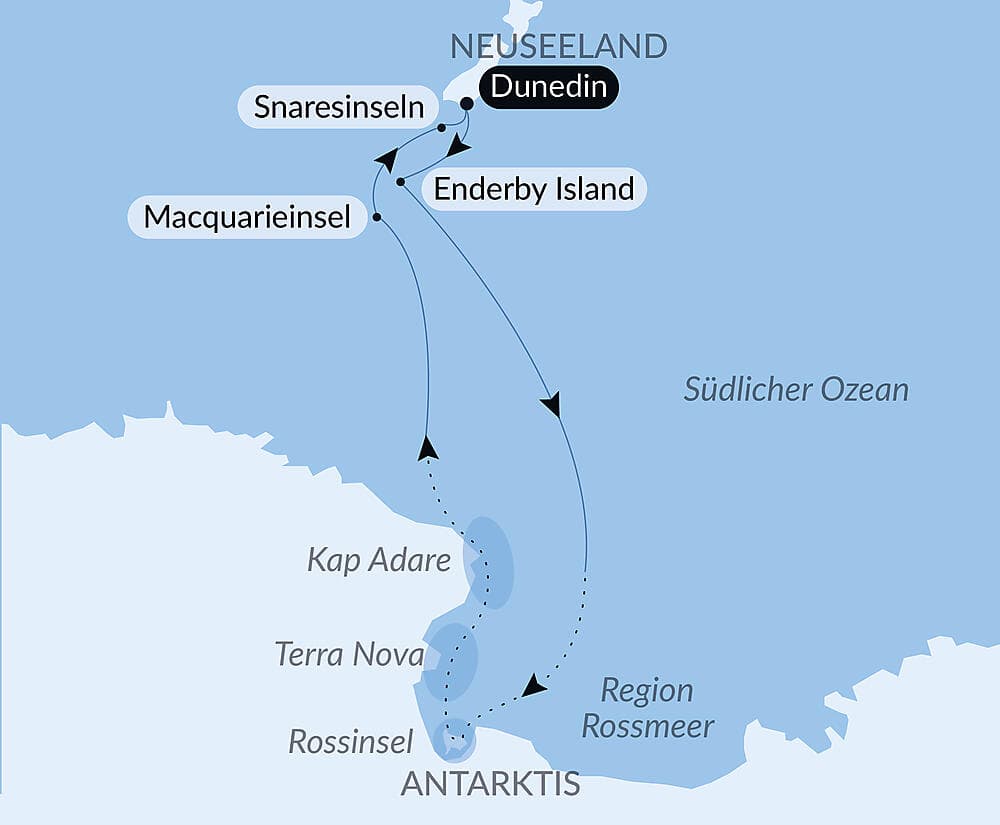
Expedition Rossmeer - auf Scotts & Shackletons Spuren
Ab
Dunedin (Neuseeland)
Bis
Dunedin (Neuseeland)
21 Nächtean BordLe Soléal
nächste Abfahrt
*Preis pro Person auf Basis einer Doppelkabinenbelegung. Dieser Preis gilt vorbehaltlich Verfügbarkeiten, kann jederzeit geändert werden. Die Kabinenkategorie, für die dieser Preis gilt, ist möglicherweise nicht mehr verfügbar. Der unten angezeigte Preis beinhaltet bereits die Ermäßigung des Ponant Bonus.